
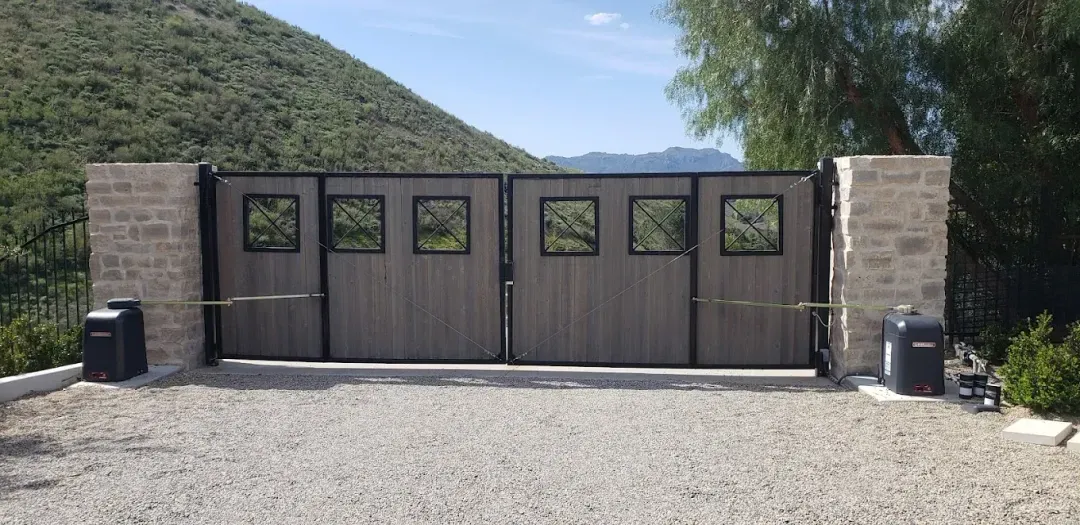
Metal & Wrought Iron Gate Repair
Most metal gates don't need replacing. They need fixing. A gate that drags, won't latch or has rust bubbling through the bottom rail usually has one or two specific failures, and once those are repaired the gate can give you many more years. We repair steel and wrought iron gates of every kind: driveway gates, walk gates, side-yard gates, swing gates and sliding gates. Most of the work is done on site with a mobile welder.
If your gate is automated and the opener is the problem, see electric gate installation and repair. Often, though, an opener that keeps stopping or burning out is a symptom of a gate that no longer hangs right, and that's what this page is about.
The problems we fix most
A gate that sags or drags
This is the most common gate problem, and it's almost never the gate "getting tired." Usually one of three things has happened: the hinges have worn so the pin has play in it, a hinge weld has cracked, or the post the gate hangs on has started to lean. Heavy gates make it worse, because all of that weight hangs off the hinge side. Once a gate drops, it drags on the ground, scrapes the paint off the bottom rail, and puts even more strain on the hinges.
A gate that won't latch
If the latch side no longer lines up, the gate has sagged, the latch post has moved, or the frame itself has twisted out of square. Adjusting the latch alone just hides the problem. We find out which one it is and fix that.
Broken or worn hinges
Hinges wear out, especially on heavy gates and gates that get slammed. Old strap hinges loosen, bolt-on hinges strip their holes, and weld-on hinges can crack at the weld. We replace hinges with ones sized for the real weight of the gate and weld or bolt them so they stay put.
Rusted posts and rotted bases
The base of a gate post is where rust starts: sprinklers hit it every day, water sits where the steel meets concrete, and the paint wears off first. A post can look fine from the top and be eaten through at the bottom. We cut out the rusted section and weld in new steel, or remove the post and set a new one, depending on how far the rust has gone.
Cracked welds and broken pickets
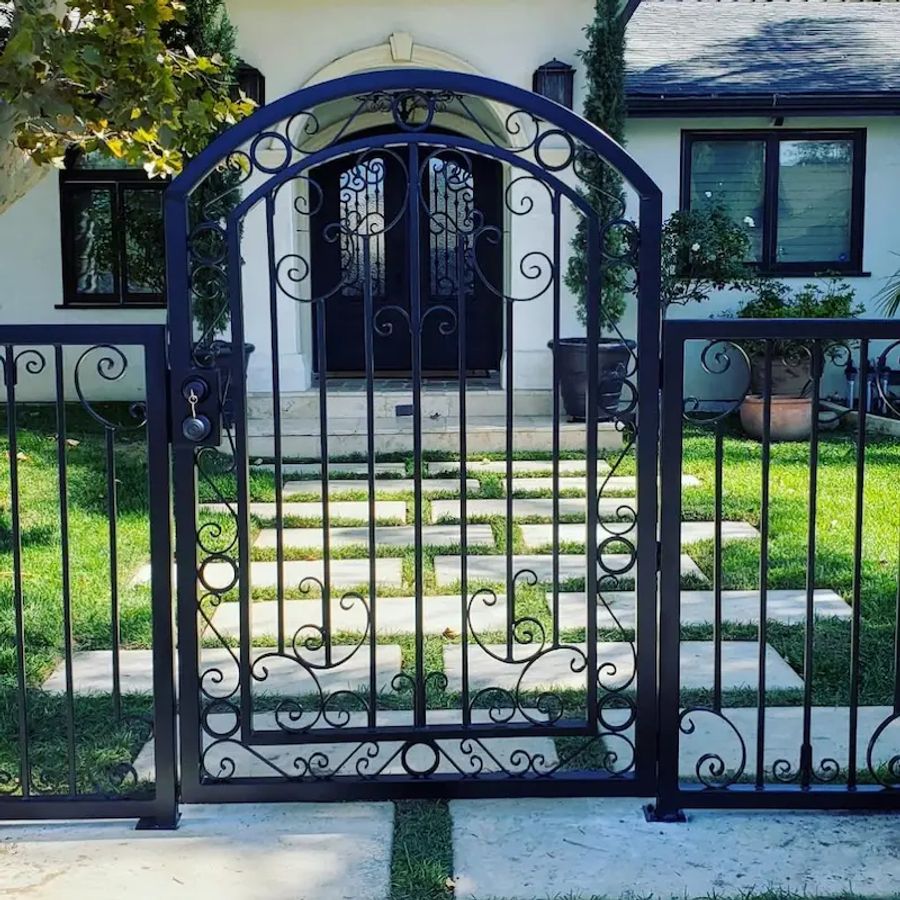
Welds crack from years of slamming, from vehicles bumping the gate, and from rust working into the joint. Pickets and scrollwork come loose the same way. We grind out bad welds and re-weld them, and replace missing or broken pickets and ornamental pieces to match the original.
Bent frames from vehicle impact
Driveway gates get hit. A bent frame can often be straightened and reinforced. If the damage is too bad, we cut out the damaged section and rebuild it, or build a new gate to the same size and style.
Sliding gate track and roller problems
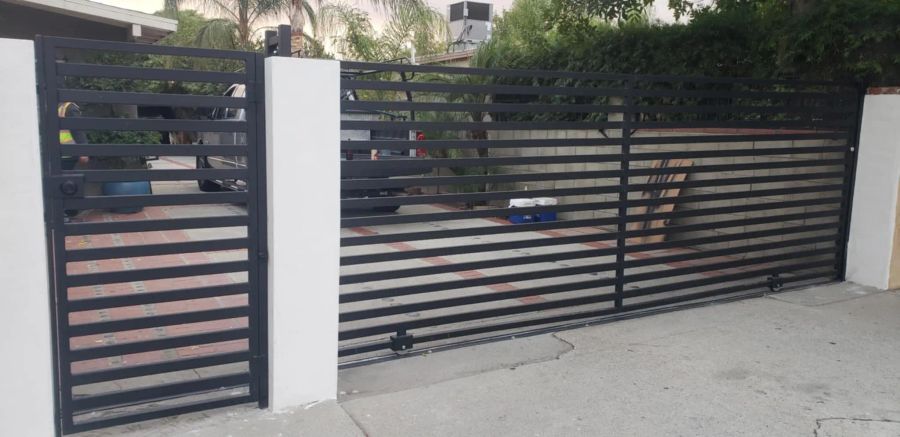
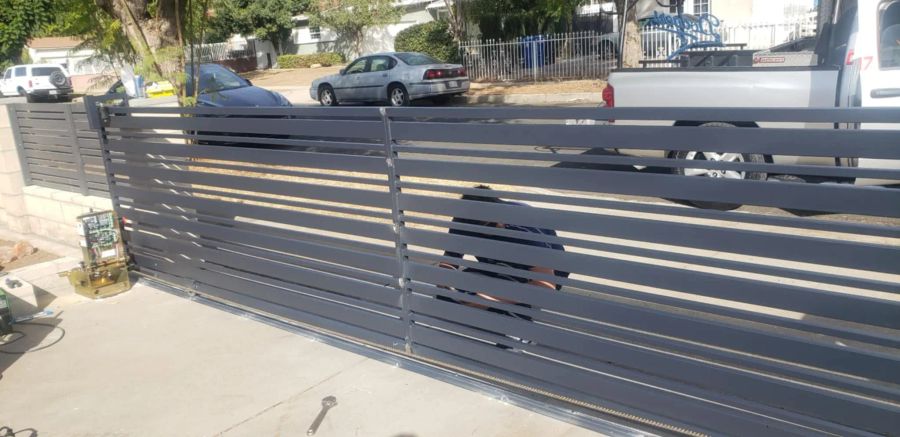
Sliding gates fail differently than swing gates. Wheels wear flat or seize, tracks bend or fill with debris, guide rollers at the top break, and the gate starts to jump the track or stick. We replace wheels and rollers, straighten or replace track, and re-align the gate so it slides cleanly.
How we repair a gate
- Look first. Send a photo or two to (818) 477-7352 and tell us what the gate is doing. Most of the time we can tell you on the phone whether it's a repair or a replacement.
- Find the real cause. On site, we check the hinges, posts, welds and frame, not just the symptom. A gate that won't latch might need a new post, not a new latch.
- Square it up. We re-hang the gate so it swings or slides level, with even gaps and a latch that lines up.
- Repair the steel. Worn hinges get replaced, cracked welds get ground out and re-welded, rusted sections get cut out and replaced with new steel, and leaning posts get reset or replaced.
- Protect it. Bare steel rusts fast, so repaired areas get primed and painted to match. If a gate comes back to the shop, it can be stripped and powder-coated.
Repair or replace?
Repair is usually the better value when the main frame is solid and the problems are in the hinges, posts, latch or a few rusted spots. It also keeps the original look, which matters on older ornamental iron that would be expensive to reproduce.
Replacement starts to make more sense when rust has eaten through the frame in several places, the gate has been badly bent more than once, or the design no longer works, for example a swing gate on a driveway that's too steep for it to clear. In those cases we can build a custom driveway gate or walk gate to replace it. We'll tell you honestly which way we'd go.
What affects the cost of a gate repair
Every repair is different, so we quote after we see the gate. The main things that move the price:
- How many things are wrong. A single worn hinge is a quick fix. A sagging gate with a rusted post and cracked welds is several repairs at once.
- The size and weight of the gate. Big driveway gates need heavier hardware and more hands.
- Whether posts need replacing. Setting a new post means breaking out and re-pouring concrete.
- On site or in the shop. Most repairs happen on site. Heavy rebuilds and powder coating happen in the shop.
- Matching ornamental work. Reproducing scrolls, castings or a custom pattern takes more time than plain pickets.
- The finish. Touch-up paint, a full repaint, or stripping and powder coating.
Estimates are free, and you get the price before we start.
Keeping a repaired gate in good shape
- Keep sprinklers from hitting gate posts. It's the single biggest cause of rusted post bases.
- Touch up chips and scratches in the paint before rust gets a start.
- Lubricate hinges and sliding gate wheels a few times a year.
- Don't let kids swing on the gate. Their weight on the latch end is hard on hinges.
- Watch for early signs: a gate that starts to drag, a latch that needs a push, or rust bubbling under the paint. Small repairs are cheaper than big ones.
For automated gates, our electric gate maintenance guide covers the opener side.
Fences and railings too
If the fence next to your gate needs work, or a railing is loose or rusted, we repair those on the same visit. See welding and repairs for everything else we fix in steel and iron.
Part of our custom gates work.